Our Work

Our research informs policies and practices that promote children’s growing and living in the contexts of education, health, and community.

Resources for Educators & Parents

We believe that literacy is liberation! Our goal is to provide families and educators with literacy resources that cultivate a love of reading, provide different world-views, and expand children’s imaginations. We have curated book lists that embody CEED’s values of justice, diversity, equity, and inclusión. We would like to share the JEDI Storybook Audit that can be used to help families and educators review books themselves.

Creating Joyful Conversations when Reading Together

Experts agree that reading fun and interesting books with your child is one of the most important things you can do for their future literacy skills and success in school!

The tips on the back of this bookmark are based on researched about the best strategies to use when reading together. Use them to guide your conversations when reading with your child(ren).
Books and Edited Volumes

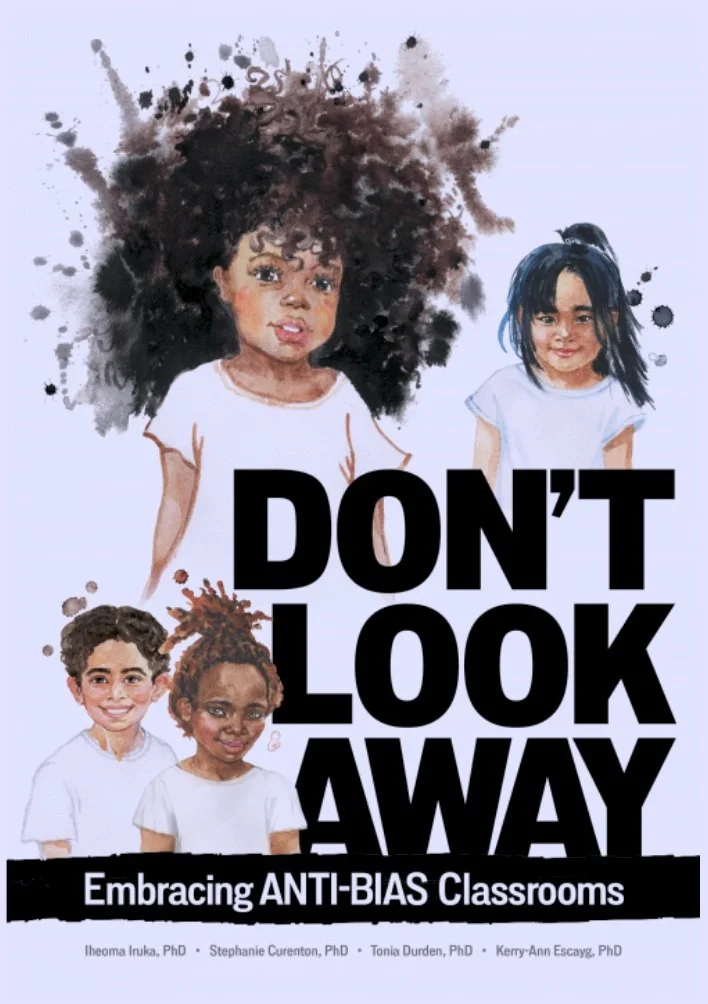
Iruka, I., Curenton, S., Escayg, K., & Durden, T. (2020). Don’t Look Away: Embracing Anti-Bias Classrooms. Gryphon House.
Iruka, I. U., Curenton, S. M., & Eke, W. A. I. (2014). The CRAF–E4 Family Engagement Model: Building practitioners’ competence to work with diverse families. Boston, MA: Elsevier/Academic Press.
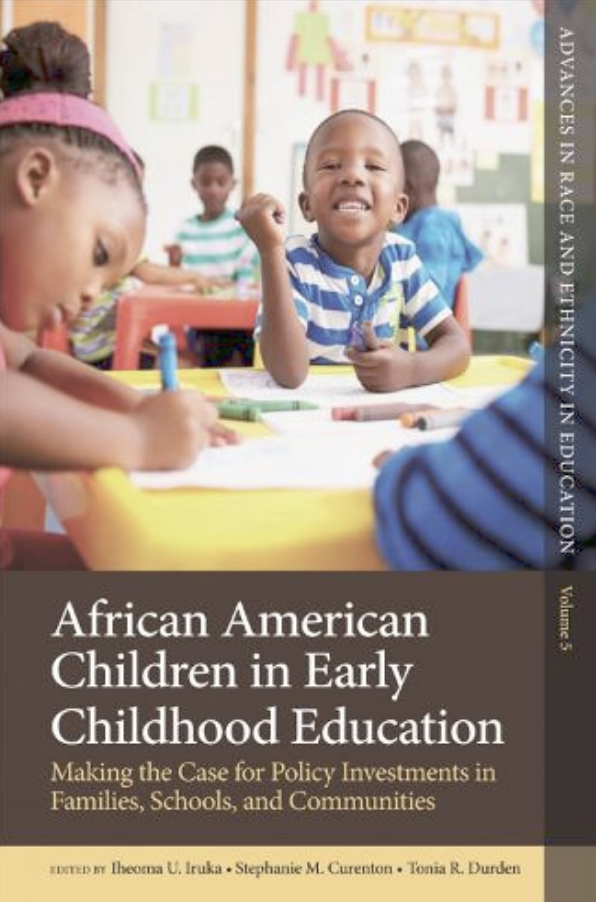
Iruka, I. U., Curenton, S. M., & Durden, T. (2016). African American children in early childhood education: Making the case for policy investments in families, schools, and communities. In C. W. Lewis & J. L. Moore III (Series Eds.), Advances in race and ethnicity in education. Manuscript in progress.
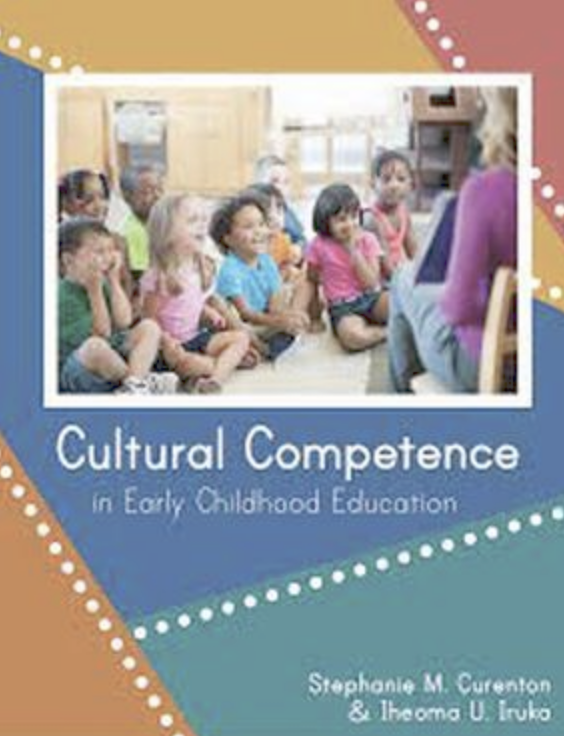
Curenton, S. M., & Iruka, I. (2013). Cultural competence in early childhood education. San Diego, CA: Bridgepoint Education.
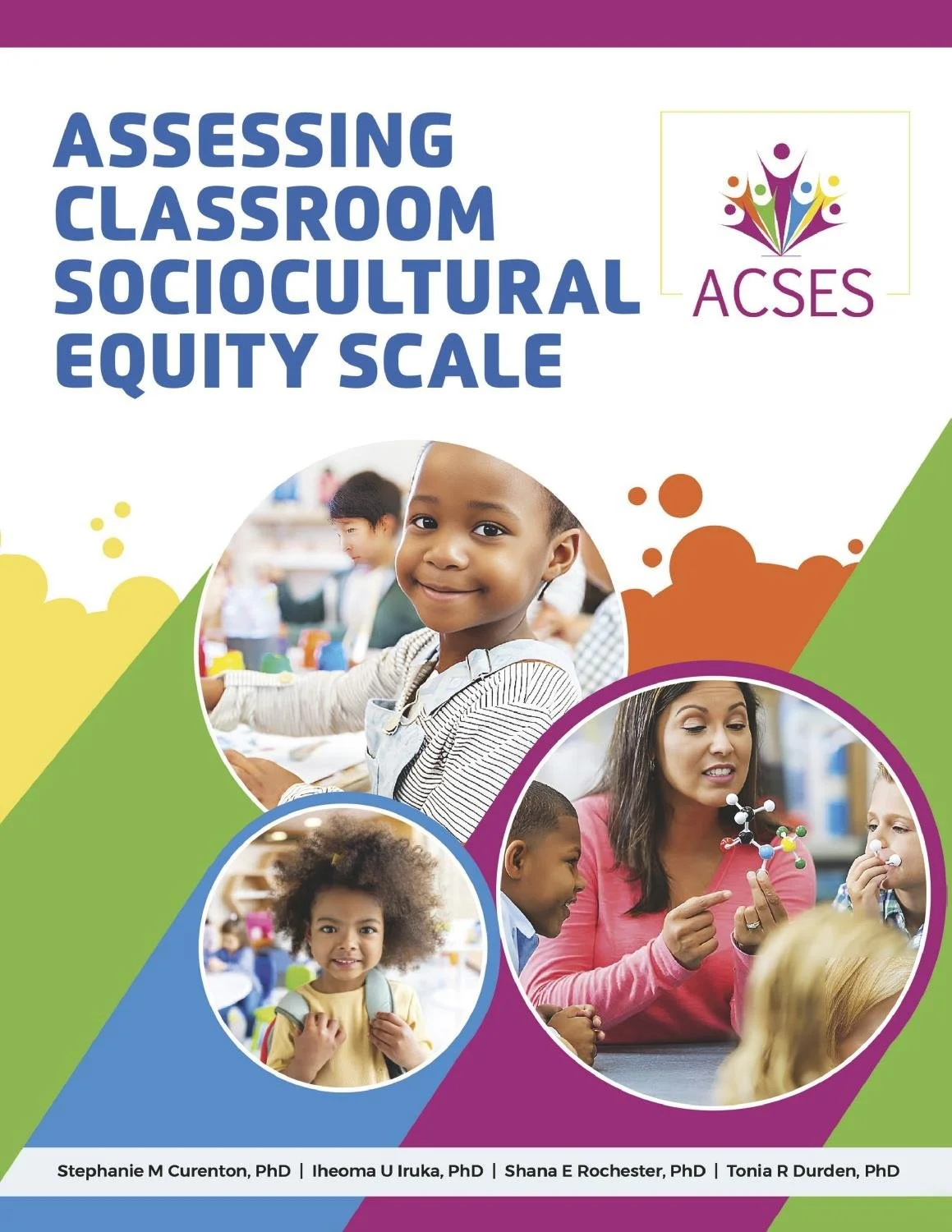
by Stephanie Curenton, Iheoma Iruka, Tonia Durden and Shana Rochester
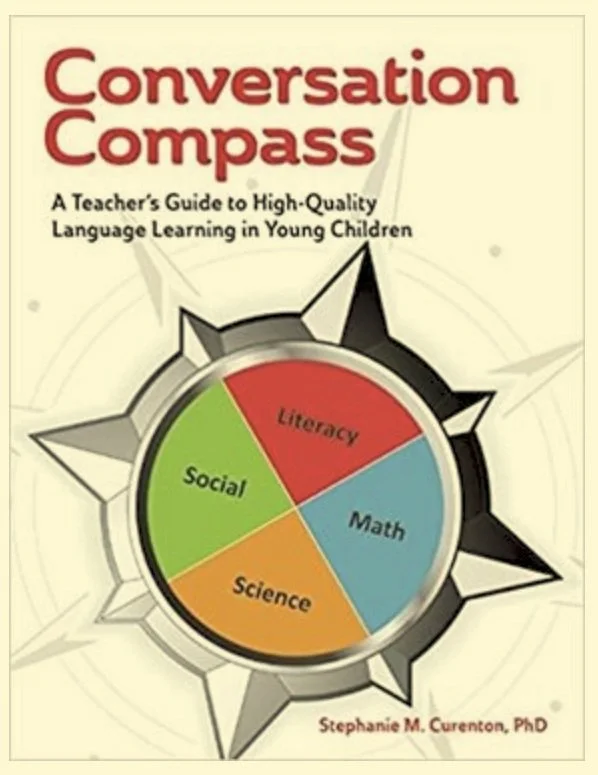
Curenton, S. M. (2016). The conversation compass: A teacher’s guide to high quality language. St. Paul, MN: RedLeaf Press.

Curenton, S. M. (Ed.). (2010). Narratives as learning tools to promote school readiness (Special issue). Early Education and Development, 21.

Peer-Reviewed Publications

Click the following links to view full publications

Growing and Thriving

Crowley, J., & Curenton, S. M. (2011). Organizational social support and parenting challenges among mocha moms. Family Relations, 60​, 1–14.

Curenton, S. M., Crowley, J. E., & Mouzon, D. M. (2018). Qualitative Descriptions of Middle-Class, African American Mothers’ Child-Rearing Practices and Values. Journal of Family Issues, 39(4), 868–895.

Curenton, S. M., McWey, L. M., & Bolen, M. G. (2009). Distinguishing maltreating versus nonmaltreating at-risk families: Implications for foster care and early childhood education interventions. Families in Society, 90, 176–182.

Curenton, S. M., & Wilson, M. N. (2003). “I’m happy with my mommy”: Low-income preschoolers’ causal attributions for emotions. Early Education and Development, 14, 199–213.

Garner, P. W., Curenton, S. M., & Taylor, K. (2005). Predictors of mental state understanding in preschoolers of varying socioeconomic backgrounds. International Journal of Behavioral Development, 29, 271–281.

Iruka, I., Curenton, S. M., & Gardner, S. (2016). How changes in home and neighborhood factors are related to change in Black children’s academic and social development from kindergarten to third grade. Journal of Negro Education, 84, 282–297

Curenton, S. M. (2008). Early childhood leaders and literacy. Early Childhood Research Quarterly, 23, 597–598.

Curenton, S. M. (2003). Low-income preschoolers’ false belief performance. Journal of Genetic Psychology, 164, 411–424.

Curenton, S. M., & Zucker, T. (2013). Instructional conversations in early childhood classrooms: Policy suggestions for curriculum standards and professional development. Creative Education, 14, 60–68. [Special issue on preschool].

Iruka, I. U., Curenton, S. M., Sims, J., Escayg, K.-A., Ibekwe-Okafor, N., & RAPID-EC. (2021). Black Parent Voices: Resilience in the Face of the Two Pandemics—COVID-19 and Racism. Researchers Investigating Sociocultural Equity and Race (RISER) Network. https://www.bu-ceed.org/riser-network.html

Iheoma U. Iruka, Stephanie M. Curenton, Jacqueline Sims, Kimberly A. Blitch & Shari Gardner. Factors associated with early school readiness profiles for Black girls. Early Childhood Research Quarterly, Volume 51, 2020, Pages 215-228

Cabell, S. Q., Justice, L. M., Piasta, S. P., Curenton, S. M., Wiggins, A., Pence Turnbull, K., & Petscher, Y. (2011). The impact of teacher responsivity education on preschoolers’ language and literacy skills. American Journal of Speech–Language Pathology, 20, 315–330.

Curenton, S. M. (2015). African American preschoolers’ pragmatic skills: Talking about emotions and the mind in the midst of fantasy. Topics in Language Disorders, 35, 46–60. [Special issue on African American children]

Curenton, S. M. (2004). The association between narratives and theory of mind for low-income preschoolers. Early Education and Development, 15, 121–145.

Curenton, S. M. (2010). Understanding the landscape of stories: The association between preschoolers’ narrative comprehension and production skills and cognitive abilities. Early Child Development and Care, 1–18.

Curenton, S. M. (2006). Oral storytelling: A cultural art that promotes school readiness. Young Children, 61, 78–89.

Curenton, S. M., & Craig, M. J. (2009). Shared-reading versus oral storytelling: Associations with preschoolers’ prosocial skills and problem behaviors. Early Child Development and Care, 1–24.

Curenton, S. M., Craig, M. J., & Flanigan, N. (2008). Use of decontextualized talk across story contexts: How oral storytelling and emergent reading can scaffold children’s development. Early Education and Development, 18, 161–187.

Curenton, S. M., & Justice, L. (2004). African American and Caucasian preschoolers’ use of decontextualized language: Use of literate language features in oral narratives. Language, Speech, and Hearing Services in the Schools, 35, 240–253.

Curenton, S. M., & Justice, L. M. (2008). Children’s preliteracy skills: Influence of maternal education and mothers’ beliefs about shared-reading interactions. Early Education and Development, 19, 261–283.

Curenton, S. M., & Kennedy, S. S. (2013). Comparison of shared reading versus emergent reading: How the two provide distinct opportunities for early literacy. ISRN Education. doi.org/10.1155/2013/936191

Curenton, S. M., Sims, J., Rochester, S.E., & Gardner, S. L. (2019). The Conversation Compass Communication Screener-Revised. Early Childhood Research Quarterly, 47, 182-193.

Kennedy, S. S., & Curenton, S. M. (2013). Is the socioemotional quality of emergent reading interactions related to young children’s emergent reading skills? The URC Undergraduate Research Journal for the Human Sciences, 12.

Curenton, Stephanie. (2022). Promoting Racial Literacy in Early Childhood: Storybooks and Conversations with Young Black Children. Child Development Perspectives. 16. 10.1111/cdep.12440.

Sarah Surrain, Stephanie M. Curenton, Cecilia Jarquín Tapia, Fostering Dual Language Learners’ Participation in Head Start Classroom Conversations Through Code-Switching in Whole Group and Small Group Settings, Early Education and Development, 10.1080/10409289.2022.2073749, 34, 4, (885-909), (2022)

Curenton, S. M., Justice, L. M., Zucker, T. A., & McGinty, A. S. (2013). Language and literacy curriculum and instruction. In V. Buysse & E. S. Peisner-Feinberg (Eds.), Handbook of response to intervention in early childhood (pp. 237–249). Paul H. Brookes Publishing Co..

Gardner-Neblett, N., Curenton, S.M. and Blitch, K.A. (2017), “Viewing African American Children’s Oral Language Skills as a Strength”, African American Children in Early Childhood Education (Advances in Race and Ethnicity in Education, Vol. 5), Emerald Publishing Limited, Bingley, pp. 123-141.

Curenton, S.M., Wilson, M.N., & Lillard, A.S. (2000). The Role of Narratives in Low-Income, Black Children’s False Belief Performance.

Iruka, I. U., Curenton, S. M., Jackson, L., Sutton, S., Orbaker, S., & Welsh, L. (2021). Don’t Look Away book study with the Schoenbaum Family Center: Evaluation report. Columbus, OH: The Ohio State University Schoenbaum Family Center.

Iruka, I. U., Curenton, S. M., Sims, J., Harris, K., & Ibekwe-Okafor, N. (2021). Ethnic-Racial Identity Formation in the Early Years. Durham, NC: Hunt Institute.

Piasta, S. B., Justice, L. M., Cabell, S. Q., Wiggins, A. K., Pence Turnbull, K., & Curenton, S. M. (2012). Impact of professional development on preschool teachers’ conversational responsivity and children’s linguistic productivity and complexity. Early Childhood Research Quarterly, 27, 387–400.

Schilder, D. E., Broadstone, M., & Curenton, S. M. (2017). Special Issue: Early Care and Education Collaboration. Early Education and Development, 28:8, 1072-1074.

Lillard, A. S., & Curenton, S. M. (1999). Do young children understand what others feel, want, and know? Young Children, 54(5), 52–57.

Lillard, A. S., Zeljo, A., Curenton, S. M., & Seja, A. (2000). Children’s understanding of the animacy constraint on pretense. Merrill–Palmer Quarterly, 46, 21–44.

Curenton SM, Rochester SE, Sims J, Ibekwe-Okafor N, Iruka IU, García-Miranda AG, Whittaker J. Antiracism defined as equitable sociocultural interactions in prekindergarten: Classroom racial composition makes a difference. Child Dev. 2022 May;93(3):681-698. doi: 10.1111/cdev.13779.

Ibekwe-Okafor, N., Sims, J. & Curenton, S.M. (2023) Black motherhood and the dual pandemics: The protective role of stable income on mental wellbeing. Journal of Social Issues, 79, 694– 715.

Syed, Gullnar & Sims, Jacqueline & House, Sherrell & Bruno, Beverly & Boulware, Angel & Tang, Kylie & Curenton, Stephanie. (2023). Innovations and Opportunities in Care for Black Mothers and Birthing People. Family & Community Health. 46. 87-94. 10.1097/fch.0000000000000361.

Nneka Ibekwe-Okafor, Jacqueline Sims, Sihong Liu, Stephanie Curenton-Jolly, Iheoma Iruka, Kerry-Ann Escayg, Beverly Bruno & Philip Fisher. (2023) Examining the relationship between discrimination, access to material resources, and black children’s behavioral functioning during COVID-19. Early Childhood Research Quarterly, 62, 335-346,

“I would like to see a truly integrated education system with ethnically and racially diverse teachers who are skilled and knowledgeable about the education needs and strengths of Black children. We have a long way to go in order to achieve this.”

Reports:

How Racism Affects Children in the Early Years

The Next Generation of Head Start

CEED 2020-2022 Biennial Report

Advocacy that Builds Parents’ Power Report

RISER Network 2020-2022 Biennial Report

JEDI Audit Tool Report